Two very different starting points
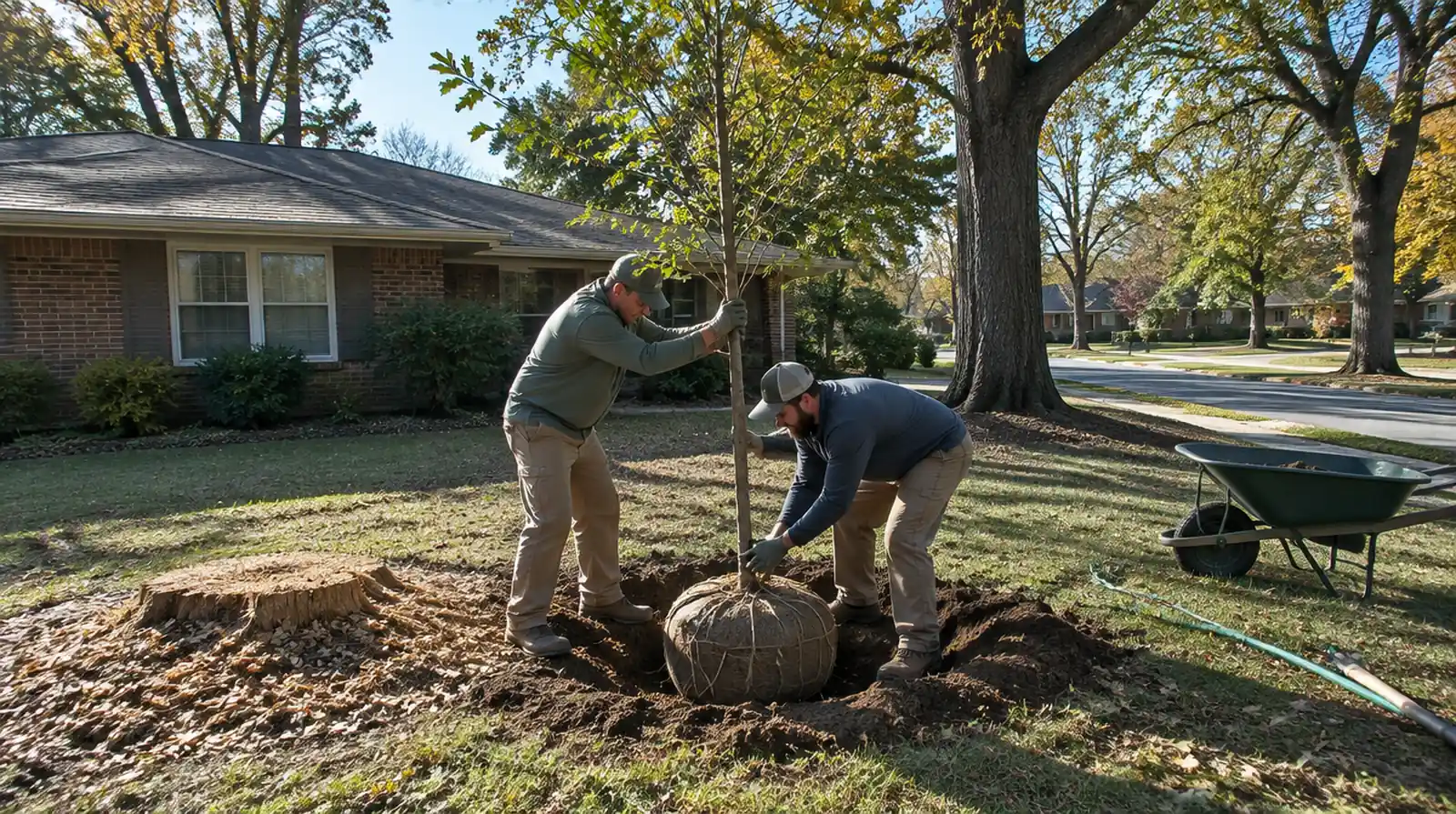
In Bentonville we plant for two kinds of yards. One is the established neighborhood, close to downtown and the older parts of town, where a mature tree has just come out because of decay, storm damage or construction. The other is a newer house on the edges of the city, where the lot came with grass and maybe one small tree from the builder.
Replanting in an older yard means working around existing roots, stumps and shade. Starting from scratch on a new lot means dealing with packed ground and full sun. The tree choices and the prep work differ for each.
Replacing a tree you lost
People in Northwest Arkansas still remember the January 2009 ice storm, which broke huge numbers of trees across the region. Storms like that, plus age, oak decline and disease, mean that big trees keep coming out of Bentonville yards. When we replant after a removal, the stump and major roots should be ground out first. We usually set the new tree several feet away from the old stump hole, where the soil has not been filled with wood chips that settle as they rot. If the old tree failed from a root problem or poor drainage, we look at that before choosing what goes back in.
Under existing large trees, think about shade. A sun-loving oak planted beneath a mature canopy will grow slowly and lean toward the light. In those spots, an understory species such as flowering dogwood, American hophornbeam or witch hazel is the better fit.
Starting from bare ground
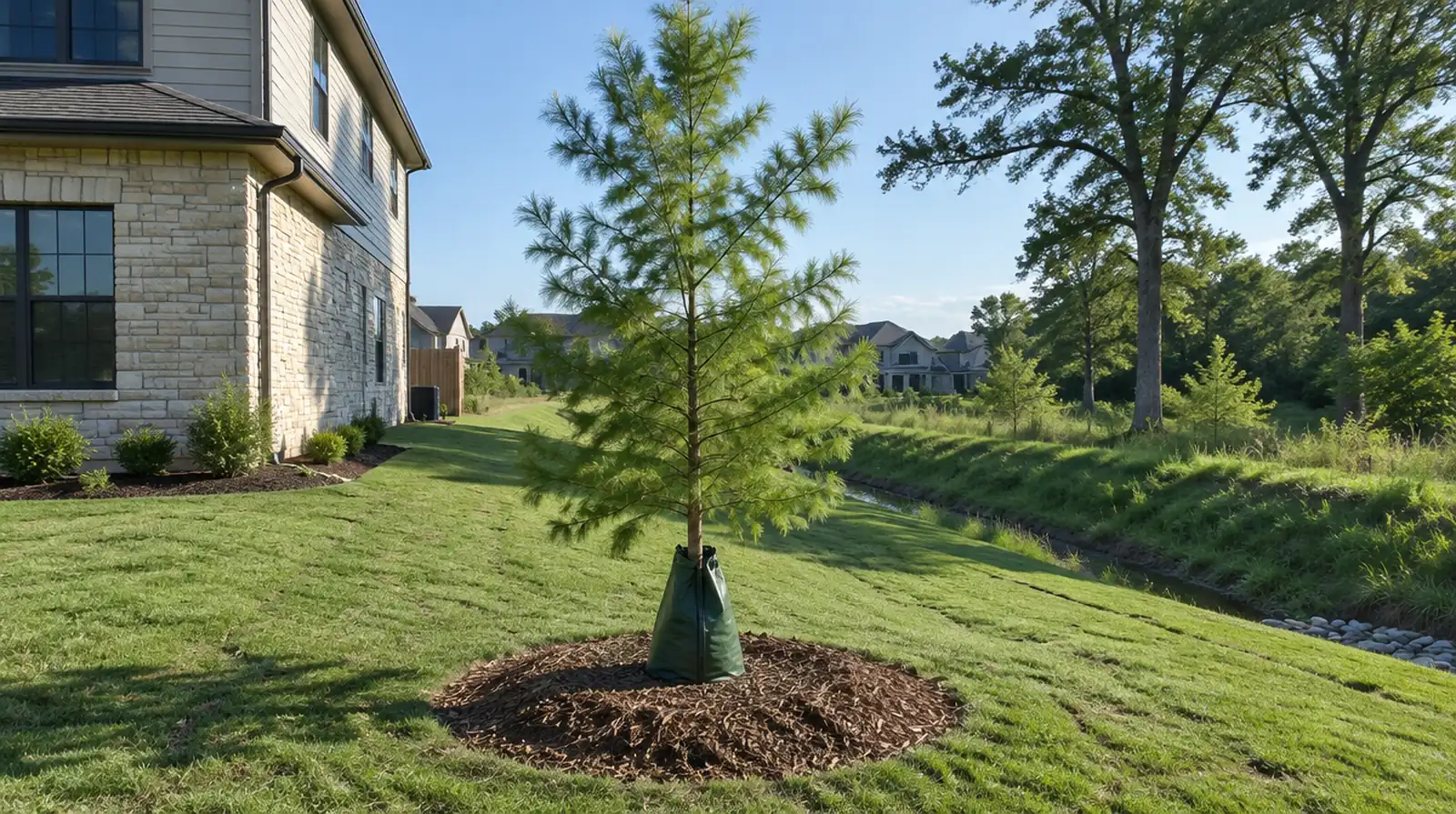
New construction lots are often scraped, graded and compacted by heavy equipment, with a thin layer of topsoil laid over the top. Water can pond in low spots and drain away fast on high ones. We loosen the soil across a wide area, not just in the hole, so roots can spread sideways. Where a yard has a swale or a spot that stays soggy after rain, we pick a species that tolerates wet feet.
Species we often recommend
- Chinkapin oak. A native oak that does well on the region's limestone-influenced, rocky soils and tolerates drought once established.
- Willow oak. Fine leaves, fast growth and strong branch structure for a big shade tree.
- Bald cypress. Handles both wet spots and dry summers, and its soft needles turn rusty orange in fall.
- Sugar maple cultivars. Bred for heat tolerance, they bring brilliant fall color where there is room and decent soil.
- Flowering dogwood. An understory tree for partial shade, especially under existing oaks.
We avoid Bradford and other Callery pears, which break up in ice and spread into fields and woods, and we steer clear of trees prone to weak wood or serious pest problems here.
The planting itself
We call to have utilities marked before we dig. The hole is wide and shallow, so the root flare sits at or just above the finished grade. Wire baskets, burlap and twine are removed from the top of the ball, and circling roots on container trees are cut or teased out. We backfill with the native soil, water thoroughly, and add a mulch ring several feet across, kept off the trunk. Most trees do not need stakes. If one does, the ties come off within a year so the trunk can build strength.
Timing and aftercare
October through early December is the best window here, because the soil stays warm while the air cools. Late winter and early spring also work. July and August are hard on new trees.
Plan on watering deeply during dry spells for two full summers. A watering bag on the trunk is an easy way to do it. After a few years, a light structural trim sets up a single strong leader.
Questions
Can you grind the old stump and plant on the same visit?
Often, yes. We schedule stump grinding first and plant once the chips are cleared.
Do you plant in Rogers and Bella Vista too?
Yes, along with Centerton, Pea Ridge, Cave Springs and Highfill.
Replace a lost tree or start new shade
Call (479) 342-4480 and tell us about the spot. We will recommend species and send a planting quote.